Strategy Management
Strategy: A Misnomer?
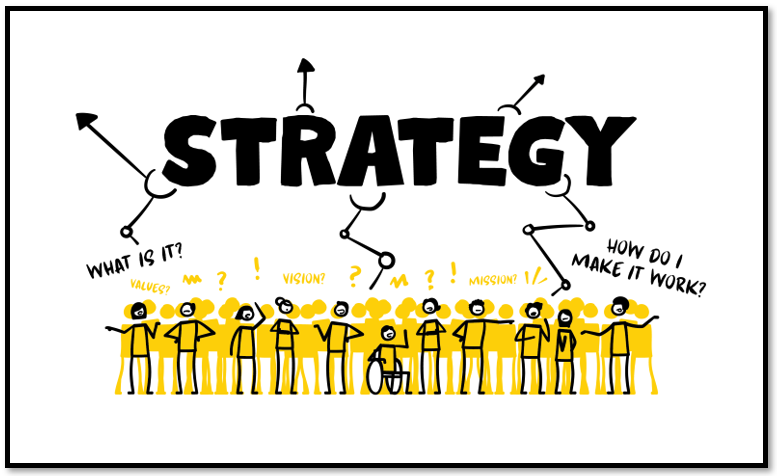
In today's business landscape, the term “strategy” is ubiquitous. From boardrooms to start-up hubs, everyone talks about the importance of having a strategy. However, the frequent and often superficial use of the term has led some to question whether “strategy” has become a misnomer, losing its original depth and significance. Organizations and businesses are investing significant resources in strategy and very often the outcomes are sub-optimal. It is therefore critical to understand the true meaning and value of strategy and my understanding of is elaborated in this article.
Strategy - The beginning
The concept of strategy originates from military terminology, where it referred to the art of planning and directing overall military operations and movements. In armed forces plans are created but execution with precision is the cornerstone of strategy. The military concept was adopted by the business world, and was popularized in the mid-20th century by thinkers like Michael Porter, who emphasized competitive advantage, value creation, and market positioning. Porter's “Five Forces” model, for instance, became a cornerstone of strategic thinking, guiding businesses in analysing their competitive environment. In the early days strategy was a part of routine business activity and greater emphasis was on execution of the strategy.
Strategy - Today
Today, strategy is often perceived as a catch-all term for any form of planning. Companies have strategies for everything from market entry and product development to customer engagement and digital transformation. This overuse has diluted the term's meaning, leading to its misapplication in various contexts. Emphasis on execution is far lesser than it should be and it is not uncommon to see strategy remaining in board rooms and meeting halls in various forms of documents.
Strategy - The Misconception
Several factors contribute to the misnomer of strategy:
1. All about Planning
Many organizations equate strategy with detailed planning. However, planning is just one component of strategy. True strategy involves making difficult choices, prioritizing resources, and taking calculated risks and most importantly execution. For example, Kodak's downfall is a classic case where the company had detailed plans but failed to make strategic shifts towards digital photography, despite inventing the first digital camera. This is a classic example of having the right plans and resources but failure of execution leading to a significant impact on the business.
2. Rigidity
Strategy is always dynamic and needs to keep pace with the changes in the market and competition. Strategic models often fail to account for the fast-paced, unpredictable nature of today's market s. Companies rigidly adhering to pre-defined strategies may be outpaced by more agile competitors. Nokia, once a leader in mobile phones, failed to adapt quickly to the smartphone revolution. It stayed with it's original strategy which helped it become the leader and refused to look into the current and future opportunities while competitors like Apple and Samsung rapidly captured the market.
3. A routine
The superficial adoption of strategic frameworks can lead to ineffective planning, sub-optimal solutions and lackadaisical implementation. This “check-the-box” approach results in strategies that are destined to fail and in many instances have catastrophic outcomes for businesses. For instance, some companies adopt the Balanced Scorecard framework and some adopted the NPS Tool to measure customer satisfaction without truly integrating their principles into the operations, leading to misaligned goals and poor performance of individuals and the companies.
4. Outward focussed
Most strategies are outward focussed and deal with markets, marketing, competition, investors etc. However like most things, strategy too must begin at home. It needs to look at the products, the services, the people, the processes, the systems and the infrastructure within the organization as the most important part of the strategy. A strategy which has a judicious mix of inward and outward factors produces results for the organization.
5. Tactics vs Strategy
Business tactics are different from business strategy, but there is a tendency to confuse tactical actions with strategic direction. Tactics are specific actions for short-term objectives, while strategy is the overarching plan guiding these actions over the long term. For example, a company might focus on aggressive marketing campaigns (a tactic) without a clear long-term strategy for market positioning and brand development.
Being strategic about Strategy
To maximise the outcome of strategy, businesses must shift from merely having a strategy to deeply understanding and implementing strategic thinking. Implementation is the core of strategy and without an execution plan with timelines and responsibilities, strategies created by the best brains in the world are bound to fall short of expectations. Some of the useful tools that help in transforming businesses with strategic thinking and implementation are discussed below.
1. Keep it flexible
Change is certain, when, how and where is iuncertain. Therefore it is important to accept that uncertainty is inherent in any strategic endeavour. Flexible strategies that can adapt to changing circumstances are more likely to remain relevant to business growth than a rigid one which does not provide for changes that occur. For example, Amazon's strategy of diversifying its business beyond online retail into cloud computing (AWS) and entertainment (Prime Video) allows it to adapt to market shifts and new opportunities.
2. Inclusive
Strategy is often considered to be the job of top leadership and is most often exclusive rather than inclusive. Inclusive strategy is far more efficient and energises the business. Developing inclusive strategy can be achieved by encouraging a culture of innovation where strategic thinking permeates the organization. Google's “20% time” policy, which allows employees to spend 20% of their time on projects they're passionate about, fosters innovation and has led to the creation of products like Gmail and AdSense.
3. Long-Term
It is important to keep the business going and growing on a day to day basis. Organisations must focus on short-term tactical measures for day to day operations and keep strategy focussed on long-term objectives and goals. Tesla's strategy, for instance, involves a long-term vision of accelerating the worl's transition to sustainable energy. This long-term focus has driven its investments in electric vehicles, battery technology, and solar energy, despite short-term challenges.
4. Knowledge based
Strategy should never be 'I think this is the best way forward'. It should always be based on knowledge, date, analytics, forecasting tools and possibly artificial intelligence. This becomes 'informed strategy' based on knowledge and not based on the gut feel of leadership. Netflix's use of big data to understand viewer preferences and inform content creation is a prime example. By leveraging data insights, Netflix produces and acquires content that resonates with its audience, driving subscriber growth and retention.
Cut the noise
The term “strategy” may have become a misnomer in some contexts due to overuse and superficial application, its fundamental importance remains unchanged. To truly benefit from strategic thinking, businesses must go beyond the buzzword and embrace a holistic, adaptable, and innovative approach to strategy. By doing so, they can navigate the complexities of the modern business environment and achieve sustainable success. Through examples like Kodak, Nokia, Amazon, Google, and Netflix, we see that true strategic thinking requires more than just planning; it demands a deep understanding of market dynamics, a willingness to innovate, a commitment to long-term goals and razor-sharp implementation.