The Power of Mentoring

Mentoring is a word which is often used in a casual manner that does not reflect the science involved and the true potential of mentorship. It is a efficient, effective, powerful and transformative process that benefits both individuals and organizations. By fostering relationships between experienced professionals and those seeking guidance, mentoring facilitates personal and professional growth, knowledge transfer, and skill development.
Mentor vs Teacher
A teacher is somebody who imparts knowledge and skills which are pre-decided and are the same for every student. It is up to the students to decipher the knowledge a teacher imparts and use it the way they understand it. There is no personalization and outcomes vary and are dependent on individual students.
A mentor empowers a person to see a possible future and believe it can be obtained. A mentor helps you discover yourself. He travels the journey with the mentee and helps in finding the right path towards the goals. Mentorship is a developmental relationship which is characterized by mutual respect, trust, and a commitment to the mentee's growth.
Forms of Mentoring
Mentoring can be in a variety of forms, depending on the context and objectives:
1. One-on-One Mentoring
This is the classic form of mentoring where one mentor works closely with one mentee and the mentor is more experienced, knowledgeable, skilled and experienced than the mentee. This is the most powerful form of mentoring which maximizes the outcomes of the relationship between the mentor and the mentee.
2. Group Mentoring
Here a single mentor works with a group of mentees. While this does not have the focus and emotional connect of one-on-one mentoring, it can foster peer learning and support within the group.
3. Peer Mentoring
Individuals at similar levels of knowledge, skill and experience within an organization mentor each other. Although this form of mentoring does not deliver the complete benefit of mentorship, it can be particularly effective in developing mutual trust and collaborative learning.
4. Reverse Mentoring
A younger or less experienced employee mentors a more senior employee. Though this is not the traditional form of mentoring, it is extremely useful in certain areas such as technology or contemporary cultural trends.
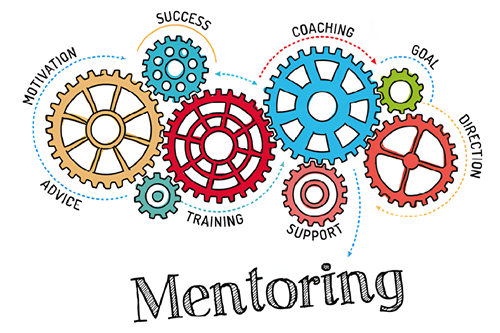
Mentor-mentee relationship is critical for deriving the maximum benefit and this happens best when there is a face to face interaction between the mentor and mentee. Technology has had an impact on almost all aspects of life including mentorship. E-Mentorship is a new form of mentorship where digital tools are used for communication between a mentor and mentee. E-mentorship, though being a remote mentor-mentee relationship has its own set of advantages specially in bridging geographical distances between the mentor and mentee. A hybrid form of mentorship where the mentor and mentee leverage the benefits of technology while retaining face to face interactions is the best form as it captures the best of both forms of communication.
Benefits of Mentoring
It is a common belief that the benefits of mentorship are the sole prerogative of the mentee. Conversely mentorship benefits both the mentor and mentee as illustrated below.
For Mentees:
1. Setting Goals: This is the beginning of any mentor-mentee relationship. The mentee must set goals based on his/her aspirations while the mentee ensures that the gaols are realistic but challenging enough
2. Creating the roadmap: This is the plan towards reaching the agreed goals. It includes the resources required, the processes involved, timelines, milestones and periodic reviews and course corrections. The roadmap is created by the mentee and the mentor helps in refining it with strategic interventions to make it better and more efficient.
3. Skill Development: Mentees acquire new skills and knowledge, enhancing their professional capabilities. These skills may be acquired either directly from the mentor or from a different source as guided by the mentor.
4. Career Advancement: Guidance from mentors can help mentees navigate career paths, identify opportunities, pursue opportunities and advance careers in a calibrated and smooth manner but at a much faster pace.
5. Increased Confidence: One of the most important functions of a mentors role is give regular feedback and support to the mentee, boosting mentees self-confidence, self-efficacy and belief that they are on a path that will lead them to their desired destination.
6. Networking Opportunities: Mentors provide mentees with an opportunity to expand their professional networks, expanding their contacts and opportunities.
7. Personal Growth: Beyond professional development, mentoring also contributes to personal growth, including improved communication, leadership, and interpersonal skills. A good mentor also encourages the mentee to choose a path that is morally and ethically right and helps in shaping the personality of the mentee.
For Mentors:
1. Leadership Development: Mentoring helps mentors refine their leadership and coaching skills. Mentors are often pushed to develop newer skills to deliver value to the mentee.
2. Job Satisfaction: Good mentors find fulfilment and increased job satisfaction from helping others succeed. Everyone cannot become a mentor, it is only those who have the passion to help others succeed (sometimes achieve more than what the mentor has achieved) who can become mentors. Mentees must be conscious about this trait in the mentor before choosing to become a mentee.
3. Learning Opportunities: Change is constant and mentors need to keep themselves updated at all times. In this process mentors can gain fresh perspectives and insights fostering their own continuous learning. On many occasions mentors learn from their mentees, as learning is always a two way process.
4. Legacy: Mentors would have achieved great things in life, but there is no better way to leave their legacy behind than shaping mentees to become value creators for themselves, the organization and the community around them.
5. Networking: Engaging with mentees and their networks can broaden mentors' professional connections.
6. Financial: Mentors charge the mentee in different ways. The common fee structures are a fixed pre-agreed amount, Fee per hour spent on the relationship and equity in the venture being taken up by the mentee.
Organizations do not focus adequately of mentorship and thus do not leverage the power of mentorship for the organization. Talent development, employee engagement, employee retention, knowledge & skill transfer, succession planning, diversity and a developing an emotional connect with the organisation are some of the benefits of fostering mentorship within organizations.
Effective Mentoring
Mentorship is often considered a hobby or a non-serious activity. This dilutes the power of mentorship and often the time spent by the mentor and mentee is wasted delivering no value for either. Mentorship is a serious responsibility both for the mentor and mentee. The relationship must have a purpose and goals must be aligned. The mentor and mentee must ensure that the following principles are adopted and followed at all times to maximize the value the relationship could deliver.
✓ Clarity
✓ Right mentor for the right mentee
✓ Setting the framework for working together
✓ Effective Communication
✓ Structured interactions
✓ Honest Feedback Mechanisms
✓ Confidentiality
✓ Trust
✓ Flexibility
Successful Mentoring Programs
Mentoring programs do not have a rigid framework. They are used for different purposes with varied goals (a few examples are given below) but delivering value to mentee, mentor and organization.
1. General Electric (GE)
GE has robust mentoring programs for a long time. The company uses mentoring initiatives by pairing high-potential employees with senior leaders ensuring knowledge and skill transfer to the next generation. Their focus is on leadership development and succession planning.
2. Google's “Guru” Program
Google has an internal mentoring program, with an Indian name “Guru”. This program facilitates employees to seek out “gurus” on specific topics or skills. This is a flexible, peer-to-peer mentoring model that is designed to encourage continuous learning and knowledge sharing across the organization.
3. Sun Microsystems
Sun Microsystems implemented an e-mentoring program to connect employees across different locations. This program facilitates global knowledge transfer and collaboration, making it easier for employees to gain insights and advice from mentors regardless of geographical barriers.
4. University of California's Mentorship Program
The University of California system has a comprehensive mentoring program for both faculty and students. Faculty members mentor junior faculty and students, providing guidance on academic and career development. This program supports professional growth and enhances the overall educational experience.
Challenges in Mentoring
Mentorship is not without challenges, it has it's own set of issues. Time commitment of mentor and mentee is often seen as a hurdle, particularly when the mentors are busy. Many mentor-mentee relationships are unstructured and thus keep meandering away from the required path. This becomes even more relevant when the mentor does not have the requisite skill sets and experience of mentoring. The mentor-mentee relationship could often be impacted by a mismatch in expectations resulting in frustrations and disappointment in one of them or either. Mentorship is never short-term, it is a long term association between the mentor and mentee and dwindling enthusiasm and commitment to the relationship could be a challenge over a period of time during the relationship. There are many other challenges that may come up in mentorship, and it is critical to make this a structured professional association between the mentor and mentee and not take anything for granted.
The power of mentorship
Mentoring is a powerful tool for personal and professional development. By fostering meaningful relationships between experienced professionals and those seeking guidance, mentoring contributes to skill development, career advancement, and organizational success. Implementing effective mentoring programs requires clear objectives, structured support, and a commitment to ongoing engagement. When done right, mentoring can transform individuals and organizations, creating a culture of continuous learning and growth.
Whether you are a seasoned professional looking to give back or a novice seeking guidance, embracing the principles and practices of mentoring can lead to profound and lasting benefits. Through successful examples and best practices, it is evident that the power of mentoring lies not just in the transfer of knowledge but in the creation of supportive, developmental relationships that propel individuals and organizations forward.
'I know it all attitude' is the enemy of success for individuals and those with this attitude seldom seek or accept mentorship. 'This is the only way to do it' is the attitude of some of the experienced professionals and this by itself is a disqualification to become a mentor. An open mind and trust are the essential ingredients of any mentor-mentee relationship. Youngsters, particularly those with aggressive aspirations or those with innovative ideas would do well to identify and collaborate with a good mentor as this fuels the journey towards realisation of the dreams.